


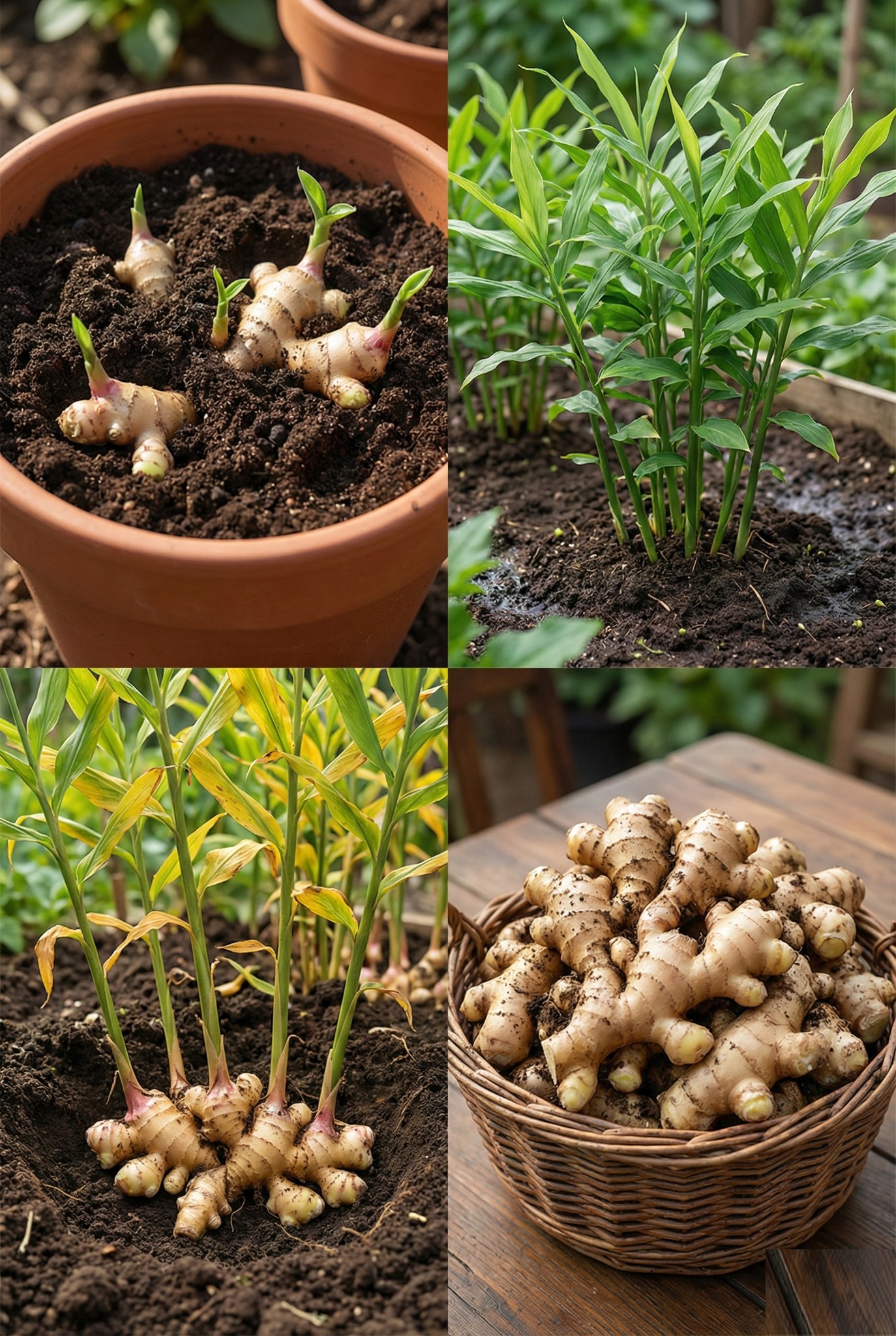
How to Grow Ginger at Home for Your Family to Eat All Year Round
Ginger (Zingiber officinale) is a versatile and aromatic spice that has been used for centuries in cooking and medicine. It is easy to grow at home, even if you have limited space. With the right care, you can cultivate a steady supply of fresh ginger throughout the year. Whether you have a garden, balcony, or even just a few pots indoors, this guide will show you how to grow ginger successfully at home.
Why Grow Ginger at Home?
Growing ginger at home offers several benefits:
- Fresh and Organic: You can ensure your ginger is free from harmful pesticides.
- Cost-Effective: Store-bought ginger can be expensive, while homegrown ginger is practically free once established.
- Perennial Plant: Ginger grows continuously and can provide harvests year-round.
- Medicinal Benefits: It has powerful anti-inflammatory and digestive properties.
- Minimal Space Required: Can be grown in pots, containers, or garden beds.
Selecting the Right Ginger for Planting
For the best results, choose fresh, organic ginger from a local market or grocery store. Look for ginger rhizomes that:
- Are plump and firm
- Have several buds (eyes), which are small growth points
- Are free from wrinkles, mold, or rot
Avoid ginger that has been treated with growth inhibitors, as it may not sprout easily. Soaking store-bought ginger in warm water overnight can help remove any growth inhibitors.
Step-by-Step Guide to Growing Ginger at Home
1. Preparing the Planting Container or Garden Bed
- If growing in a pot: Use a container that is at least 12 inches deep and wide to allow rhizome expansion.
- If growing in the ground: Choose a spot with well-draining, rich soil and partial shade.
- Ensure proper drainage by adding pebbles at the bottom of the pot or loosening garden soil.
2. Preparing and Planting the Ginger Rhizome
- Cut the ginger into 2-inch sections, ensuring each piece has at least one or two buds.
- Allow the cut pieces to dry for 24 hours to prevent rotting.
- Plant each piece 1-2 inches deep, with the buds facing upwards.
- Space multiple rhizomes at least 8 inches apart to allow for growth.
- Water lightly after planting to settle the soil.
Caring for Ginger Plants
1. Watering
- Keep the soil moist but not soggy.
- Water 2-3 times a week during dry periods.
- Reduce watering in cooler months to prevent rot.
2. Sunlight and Temperature
- Ginger prefers warm temperatures (75-85°F or 24-29°C).
- Provide partial shade or indirect sunlight.
- If growing indoors, place near a bright window but away from direct sunlight.
3. Fertilizing
- Feed with organic compost or balanced fertilizer (such as 10-10-10) every 4-6 weeks.
- Use diluted fish emulsion or compost tea for a natural nutrient boost.
- Avoid over-fertilizing, which may lead to excessive foliage and smaller rhizomes.
4. Mulching
- Apply a layer of organic mulch (straw, leaves, or wood chips) around plants to retain moisture and regulate soil temperature.
- Mulching also helps suppress weeds and prevent soil erosion.
5. Pest and Disease Control
- Common Pests:
- Aphids, spider mites, and fungus gnats can attack ginger plants.
- Use neem oil or insecticidal soap to control infestations.
- Diseases:
- Root rot occurs due to overwatering—ensure proper drainage and avoid waterlogging.
- Fungal infections can be prevented by providing good air circulation.
Harvesting Ginger
- Ginger takes about 8-10 months to fully mature, but you can harvest baby ginger after 4-5 months.
- When the leaves start yellowing and drying, it’s a sign the ginger is mature.
- Gently dig around the rhizomes and harvest only what you need, leaving some for continuous growth.
- Wash off the soil and let the ginger dry before storing.
How to Grow Ginger Year-Round
To ensure a continuous supply of fresh ginger:
- Use Multiple Containers: Stagger planting times so that new ginger is always growing.
- Regrow from Leftover Pieces: After harvesting, replant a few rhizomes to start a new batch.
- Bring Indoors in Winter: If you live in a cold climate, move potted ginger indoors before temperatures drop below 50°F (10°C).
- Keep a Warm, Humid Environment: If growing indoors, mist occasionally to mimic tropical conditions.
Tips for Storing and Using Fresh Ginger
- Store fresh ginger in a paper towel inside a zip-lock bag in the refrigerator for up to 3 weeks.
- Freeze whole ginger rhizomes for long-term storage (up to 6 months).
- Use fresh ginger for teas, stir-fries, soups, and smoothies.
- Dry ginger and grind into powder for a homemade spice blend.
Common Problems and Solutions
| Problem | Cause | Solution |
|---|---|---|
| Yellowing leaves | Overwatering or nutrient deficiency | Water less frequently and apply organic fertilizer. |
| No sprouting | Old or treated rhizomes | Use fresh, organic ginger with visible buds. |
| Root rot | Poor drainage or excessive moisture | Improve soil drainage and reduce watering. |
| Slow growth | Lack of warmth and nutrients | Keep in a warm place and feed with compost tea. |
| Pests on leaves | Aphids, spider mites, or whiteflies | Spray with neem oil or insecticidal soap. |
Final Thoughts
Growing ginger at home is a rewarding and simple process that provides a continuous supply of fresh, flavorful rhizomes for your family to enjoy all year round. With minimal care, proper watering, and the right growing conditions, you can cultivate healthy ginger plants in pots or garden beds.
Start planting today, and in just a few months, you’ll be harvesting homegrown ginger to use in your favorite dishes and remedies!
