


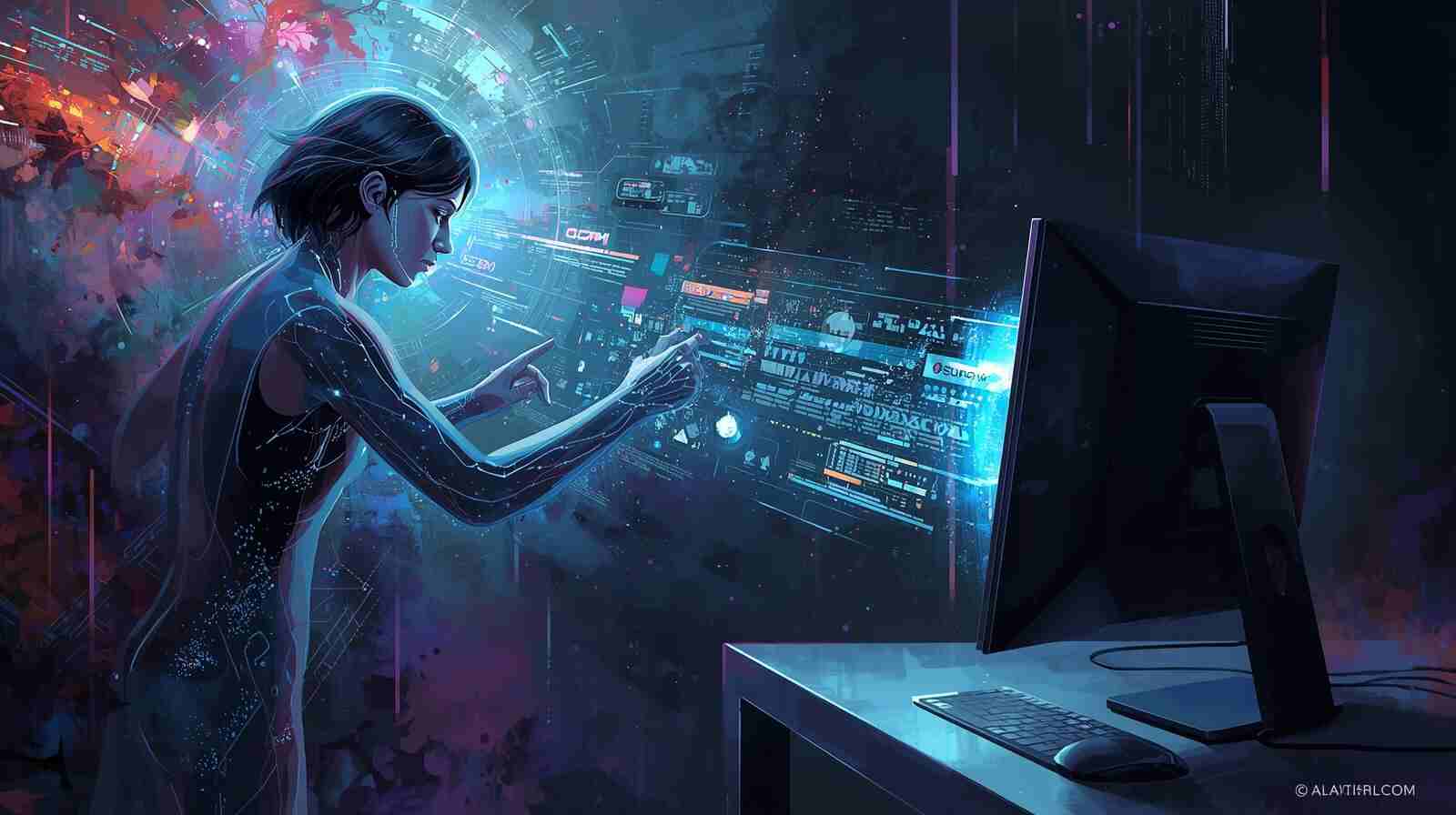
Where Humans and Machines Truly Meet
If you think about it, our relationship with technology has become more emotional than mechanical. We don’t just use devices anymore; we interact with them as if they were part of our daily lives. From saying “Hey Siri” to waving at smart TVs, the impact of new technology on human-computer interaction is clear everywhere.
Back in the early days of computers, interaction meant typing commands into a black screen. Now, we talk, touch, and even gesture to control things. This shift shows how deeply technology understands human behavior today. It’s not about machines doing tasks — it’s about machines learning to connect with us naturally, almost like real companions.
What Human-Computer Interaction Really Means Today
The term human-computer interaction (HCI) might sound technical, but it’s simply how people communicate with computers. Decades ago, this meant using keyboards and mice. Now, it’s about designing systems that understand people’s voices, faces, and even emotions. That’s what makes this field so fascinating.
Modern HCI design focuses on user comfort and emotional connection. Think about voice assistants or facial recognition — they don’t just perform commands, they understand intent. This human touch makes technology more intuitive and engaging. The more natural our communication becomes, the less we even notice we’re “interacting” with machines at all.
The Power of Artificial Intelligence and Machine Learning

The most significant change in human-computer interaction comes from artificial intelligence (AI) and machine learning (ML). These technologies make systems “learn” from experience, just like humans. Your smartphone predicting what you’ll type or Netflix recommending your favorite shows, that’s AI quietly at work.
AI turns technology from a simple tool into an intelligent companion. It studies user behavior and automatically improves interactions. Over time, systems become more personal, learning what you like, when you work best, and how you respond. This human-like adaptability is exactly how new technology impacts human-computer interaction in daily life.
Virtual Reality and Augmented Reality – Stepping Into a New World
If AI is the brain of digital innovation, then virtual reality (VR) and augmented reality (AR) are its senses. These tools immerse users in interactive environments where learning, work, or entertainment feels alive. Imagine designing a house in VR or studying biology through 3D AR visuals — it’s not science fiction anymore.
In 2025, VR and AR are reshaping industries across the spectrum from gaming to healthcare. They give users real-time control and realistic experiences. This hands-on engagement enhances the user experience, making people feel part of the system rather than outside observers. The result? Stronger emotional connection and better learning through digital immersion.
Voice, Gesture, and Brain-Based Controls: Natural Ways to Connect
Have you noticed how saying “turn off the lights” now feels easier than pressing a button? That’s voice control simplifying life. Technologies like Alexa, Google Assistant, and Siri are examples of how natural communication can feel digital yet human at the same time.
Beyond voice, gesture-based and brain-computer interfaces (BCIs) are the next frontier. Imagine controlling a game with hand movements or typing through thought commands. These advances bring accessibility for people with disabilities and redefine how we view technology. It’s a glimpse into the future — where human-computer interaction happens without even touching a screen.
Designing with Humans in Mind: The Heart of Modern HCI
No matter how advanced technology becomes, its success depends on one thing: human-centered design. HCI design isn’t just about making things look modern; it’s about making them easy to use, inclusive, and meaningful. Every button, sound, or gesture should make life simpler, not harder.
This is why accessibility and ethics play a huge role today. Developers must consider users with different abilities, languages, and cultures. How new technology impacts human-computer interaction depends on empathy — understanding what users feel, not just what they click. That’s what separates intelligent design from truly human design.
Real-Life Examples of Modern Interaction Technology
Chances are that you encounter new technology in human-computer interaction (HCI) dozens of times each day without even knowing it. From the heart rate monitor on your smartwatch to your fridge reminding you of groceries and your car predicting traffic, the new ecosystem of HCI is dawning. Even though tech giants like Apple, Microsoft, and Tesla are leading the field, innovative startups are joining the race to deliver cutting-edge technology.
HCI has narrowed to smart homes, wearables, and adaptive apps that enhance our daily comfort, all made possible by machine learning and artificial intelligence. Each example outlined in this article verifies that human-computer interaction transcends commissions. Instead, HCI technology is shaping every aspect of the modern experience.
The Challenges and Opportunities Ahead
Of course, every advancement comes with challenges. As technology learns more about us, questions of privacy, ethics, and data security arise. We must ensure that innovation doesn’t come at the cost of personal trust. Transparent systems and strong privacy laws will define the next era of HCI.
Still, opportunities are massive. Future professionals will need both technical and emotional intelligence. Understanding code won’t be enough; understanding people will matter more. The ability to design systems that respect human values will drive meaningful progress in human-computer interaction.
Conclusion – Building a Human Future with Smart Technology
At its heart, how new technology impacts human-computer interaction is about more than machines getting smarter; it’s about making life feel more human. Every breakthrough from voice assistants to AI-driven apps brings us closer to seamless, natural interaction.
When technology understands emotion, speech, and intent, it becomes more than a tool; it becomes a companion. The future of human-computer interaction lies in empathy, ethics, and connection. Because in the end, great technology doesn’t replace humanity, it reflects it.
FAQs
What is the primary goal of human-computer interaction?
The goal is to make digital systems easier and more natural for people to use, improving comfort and accessibility.
How does new technology impact user experience?
New tools like AI, VR, and voice assistants make interaction faster, smarter, and more personal.
What role does AI play in HCI?
AI helps computers learn user behavior, personalize experiences, and predict actions intelligently.
Why are accessibility and ethics important in HCI?
They ensure that everyone, regardless of ability, can benefit from technology without privacy risks.
What’s next for human-computer interaction?
Expect more natural communication — through voice, gesture, and even thought-based controls.
