


Introduction – Why Knowing the Difference Really Matters
Let’s be honest, most men can’t always tell the difference between a dinner suit and a business suit. They both look sharp, sleek, and professional. But the truth is, they serve entirely different purposes. Wearing one in place of the other can change how people perceive your confidence, class, and attention to detail.
Think about it, showing up at a wedding in your regular business suit feels out of place, right? Just like walking into an office in a shiny dinner suit (tuxedo) would look awkward. Each suit tells a different story. And if you care about first impressions, knowing when to wear each truly matters.
What Exactly Is a Business Suit?
A business suit is the ultimate symbol of professionalism. It’s the outfit you wear when you want to show reliability, competence, and class without being flashy. You’ll usually see it in neutral colors like navy, charcoal, or black — perfect for meetings, presentations, or office settings.
Most business suits are made from wool or blended fabrics that look polished but remain comfortable all day. Pair it with a clean dress shirt, a tie, and leather shoes — that’s your power outfit. It doesn’t shout for attention; instead, it quietly builds respect. That’s the beauty of real, understated confidence.
The Purpose and Power of a Business Suit
There’s something special about slipping into a perfectly tailored business suit. It instantly changes how you stand, walk, and even talk. You see, a good suit isn’t just clothing — it’s confidence stitched into fabric. When you wear it, people notice.
Whether it’s a job interview or a client meeting, your business suit silently speaks for you. It says, “I’m capable, serious, and ready to deliver.” And that’s powerful. It’s no wonder professionals call it their second skin — it doesn’t just make you look the part, it helps you become the part.
What Defines a Dinner Suit (Tuxedo)?
Now let’s talk about the showstopper, the dinner suit, also known as the tuxedo. This isn’t for your average office day. It’s reserved for those elegant, once-in-a-lifetime moments — weddings, black-tie dinners, or special evening events where sophistication takes center stage.
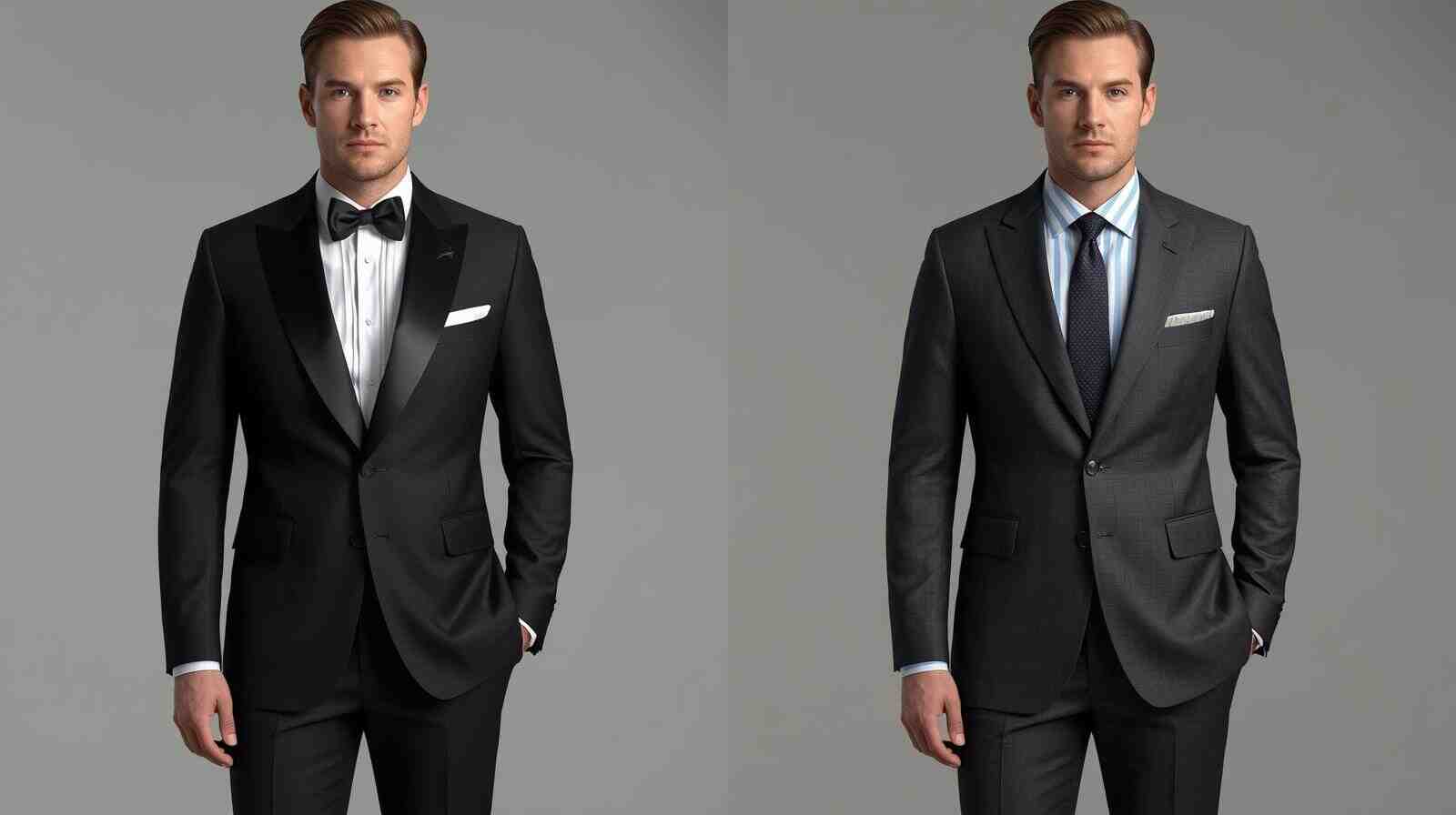
Unlike a business suit, the dinner suit often has satin lapels, a shiny stripe down the trousers, and is paired with a crisp white shirt and bow tie. The goal here isn’t subtlety — it’s elegance. When you wear it, you’re not blending in; you’re standing out with refined confidence.
Main Differences Between Dinner Suit and Business Suit
So what really separates a dinner suit from a business suit? It comes down to three things — purpose, fabric, and formality. A business suit is made for professionalism and daily wear, while a dinner suit is built for celebration and luxury.
Business suits are matte, understated, and flexible. Dinner suits, on the other hand, shine — literally. They feature glossy lapels, detailed tailoring, and luxurious finishes. Think of it this way: a business suit says “I mean business,” while a dinner suit says “I’m here to impress.” Two different occasions, two very different moods.
When to Wear Each Suit – Business vs Formal Events
Here’s the golden rule: wear your business suit during the day and your dinner suit at night. It’s really that simple. Business suits are for work — client meetings, conferences, or interviews. They help you blend professionalism with subtle authority.
But when the sun sets and it’s time for celebrations — weddings, formal dinners, or gala events — it’s tuxedo time. A dinner suit belongs under soft lights, champagne glasses, and polished shoes. Wearing it to the right event not only makes you look sharp but also shows respect for the occasion.
Style and Accessory Rules for Each Look
Accessories can make or break your look. For a business suit, go with a classic tie, a wristwatch, and polished leather shoes. Keep it minimal — subtlety is your best friend. Avoid shiny or flashy pieces that distract from your professional tone.
A dinner suit, however, invites a touch of flair. Pair it with a bow tie, cufflinks, a white pocket square, and glossy black shoes. Want extra style points? Add a pocket scarf or waistcoat. Remember, the dinner suit celebrates elegance, while the business suit embodies discipline.
Common Fashion Mistakes to Avoid
Many men get it wrong — and it’s usually because they mix up formal and professional wear. Don’t wear your tuxedo to a morning meeting, and don’t walk into a black-tie dinner in your business suit. Each has its place and purpose.
Also, avoid pairing a regular tie with a dinner suit, as it kills the formal charm. Never wear sneakers with either suit, and always check your fit. A well-tailored, affordable suit beats an expensive, loose one any day. Fit isn’t fashion — it’s the foundation of style.
Tips for Choosing the Right Suit for Your Body and Budget
You don’t need to spend thousands to look good. Start with the basics, pick high-quality fabric, and focus on tailoring. For business suits, wool blends are best; they breathe well and stay crisp through long days.
For dinner suits, go with rich materials like velvet, fine wool, or satin finishes. If you’re attending a wedding or formal gala, invest in one timeless tuxedo. You’ll thank yourself later. And if you’re on a budget, buy one classic business suit and get it perfectly tailored — fit always beats price.
Conclusion
At the end of the day, understanding dinner suit vs business suit isn’t just about fashion — it’s about respect. Respect for the event, for the people you meet, and for yourself.
Your business suit helps you win trust in the boardroom. Your dinner suit earns admiration at night. Each serves its own purpose beautifully. So, wear them wisely, wear them proudly — and remember, true style isn’t about trends. It’s about wearing the right thing, the right way, at the right time.
