


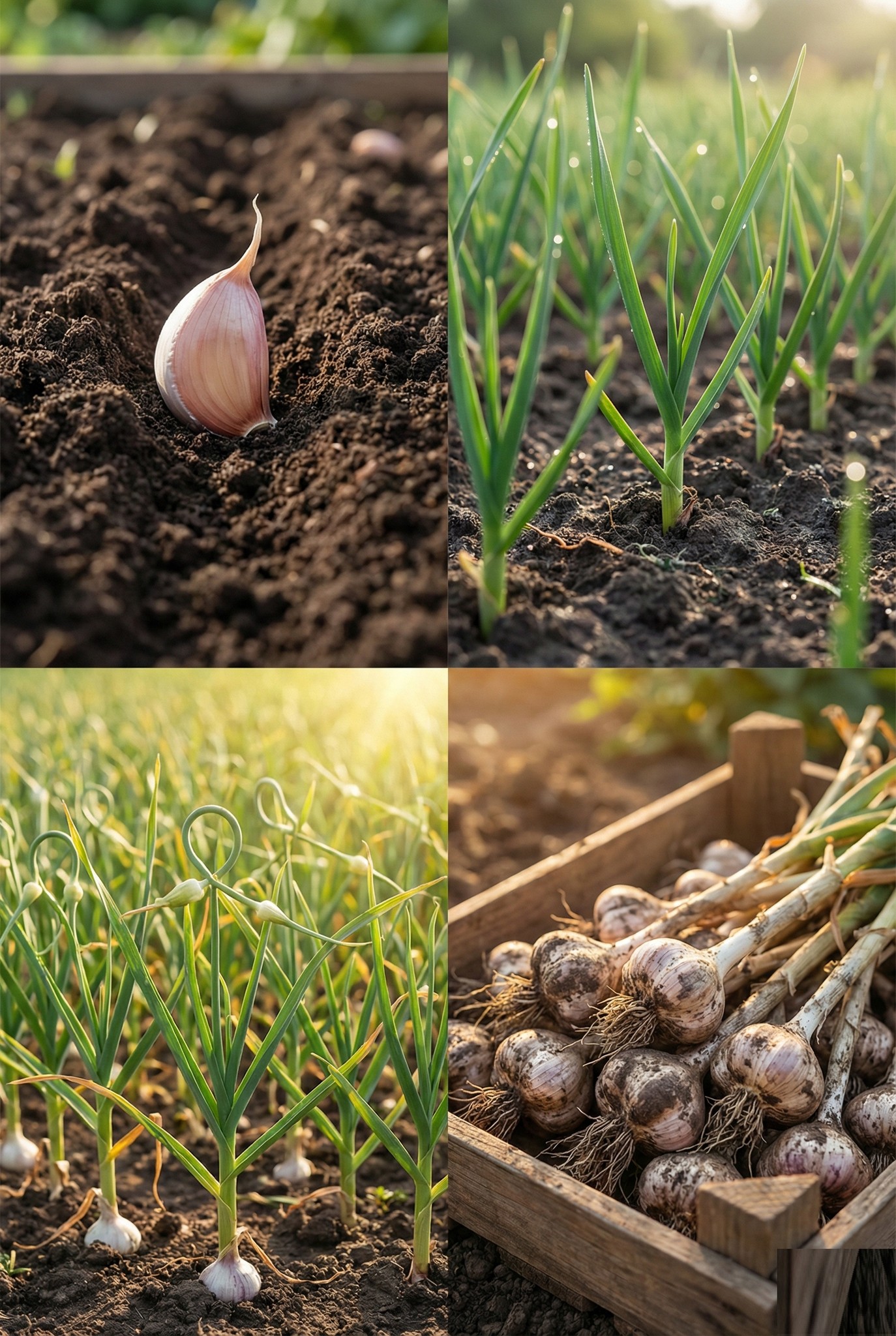
If you live in an apartment or a home with limited outdoor space, you might think growing garlic isn’t possible. But with crate gardening, you can turn even a small balcony or patio into a productive garlic patch. Using wooden or plastic crates is a space-saving and efficient way to grow this essential kitchen staple right in the heart of the city.
Garlic is low-maintenance, compact, and rewarding. One clove can grow into a full bulb, and the green shoots—called garlic scapes—can also be harvested for cooking. Follow this step-by-step guide to grow your own garlic using crates, and enjoy fresh, flavorful bulbs no matter how limited your space.
Step 1: Choose the Right Crate
Start with a wooden or plastic crate that’s at least 8–10 inches deep and wide enough to accommodate several cloves spaced 4–6 inches apart. Wooden crates are breathable and visually appealing, while plastic crates are lightweight and easy to clean. If using wood, make sure it’s untreated to avoid chemical contamination.
Drill several drainage holes in the bottom if they’re not already present. Line the crate with breathable material like burlap, landscape fabric, or old cotton cloth to prevent soil from spilling out while allowing proper drainage.
Place your crate on bricks or plant feet to raise it slightly—this improves air circulation and prevents water from collecting underneath, especially on balconies or patios.
Step 2: Prepare the Ideal Soil
Garlic grows best in loose, well-draining soil that’s rich in organic matter. Avoid compacted or heavy garden soil, which can prevent bulb development and increase the risk of rot.
Create a suitable growing mix with:
-
1 part compost or worm castings
-
1 part coconut coir or peat moss
-
1 part perlite or coarse sand
This blend offers good moisture retention, aeration, and essential nutrients for garlic to grow strong and healthy. Fill the crate with this mix, leaving about 1 inch of space from the top.
Step 3: Select and Prepare Garlic Cloves
Buy garlic bulbs intended for planting (called seed garlic) from a nursery or trusted supplier. Avoid supermarket garlic, which may be chemically treated to prevent sprouting. Choose a variety suited to your climate—softneck garlic for warm regions, or hardneck garlic for colder areas.
Gently break apart the bulb into individual cloves, keeping the papery skins intact. Select the largest, healthiest cloves for planting, as these produce the biggest bulbs.
Step 4: Planting Garlic in Crates
Garlic is best planted in the fall (4–6 weeks before the first expected frost), though early spring planting can work in milder climates.
To plant:
-
Make holes about 2 inches deep and 4–6 inches apart.
-
Place each clove pointy side up, flat root end down.
-
Cover with soil and gently pat down.
A standard crate can accommodate 6–12 cloves depending on its size and spacing.
Water thoroughly after planting to help settle the soil and initiate root growth.
Step 5: Light and Placement
Garlic needs full sun—at least 6 hours of direct light daily. Position the crate in the sunniest spot on your balcony, rooftop, or patio. In colder regions, garlic benefits from winter chilling. In warmer areas, you can refrigerate cloves for a few weeks before planting to simulate this process.
As garlic grows, long green shoots will emerge from the soil. These are a sign that root development is happening underground.
Step 6: Watering and Fertilizing
Garlic prefers consistent moisture but not soggy soil. Water when the top inch feels dry, especially during active growth. Reduce watering once the leaves begin to yellow near harvest time to allow the bulbs to cure naturally in the soil.
Feed garlic monthly with diluted organic fertilizer such as compost tea, fish emulsion, or a balanced slow-release mix. This supports healthy foliage and bulb formation.
Mulching with straw, dry leaves, or grass clippings helps retain moisture and suppress weeds.
Step 7: Harvest and Cure Your Garlic
Garlic is ready to harvest when the lower leaves turn yellow and begin to dry, usually in late spring or early summer (if planted in fall). Loosen the soil gently with your hands or a hand tool and lift the bulbs carefully to avoid damage.
Do not wash the garlic after harvesting. Instead, cure it by laying the bulbs out in a well-ventilated, dry, shaded area for 2–3 weeks. Once the outer skins have dried, trim the roots and tops, then store in a cool, dry place.
Step 8: Reuse and Rotate
Once you’ve harvested your garlic, refresh the soil with new compost or organic amendments before replanting. You can either plant a second round of garlic (if the season allows) or rotate in other crops like leafy greens or herbs to maintain soil health and prevent disease buildup.
Crate gardening is a practical and sustainable way to grow garlic in urban spaces. It’s flexible, efficient, and provides an excellent harvest with minimal effort. With a few basic materials and this step-by-step approach, you can enjoy your own homegrown garlic—even from the smallest balcony.
