


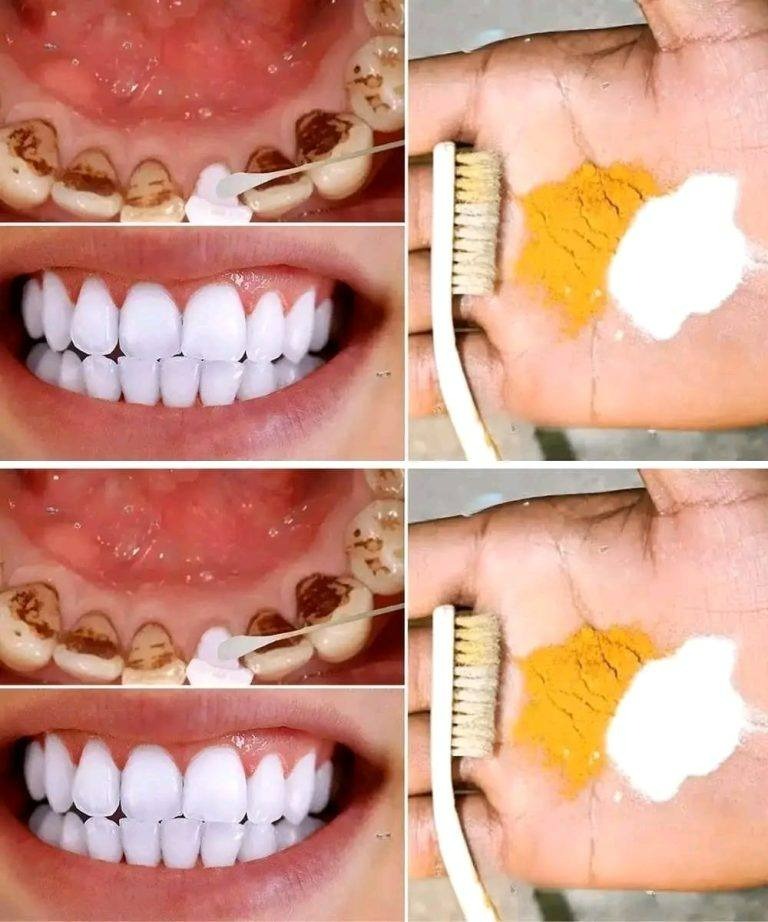
While the promise of dramatically whiter teeth in just 2 minutes is appealing, it’s important to approach this popular natural remedy with realistic expectations and a strong emphasis on safety. Turmeric and baking soda can be a gentle polishing aid for surface stain removal, but they are not a substitute for professional whitening or a replacement for consistent oral hygiene.
Let’s break down the science, the method, and the crucial precautions.
How This Remedy Works: The Science
-
Baking Soda (Sodium Bicarbonate): A mild, naturally abrasive powder. Its fine granules can help scrub away surface stains (from coffee, tea, wine) and dental plaque. It’s also alkaline, which can help neutralize acids in the mouth.
-
Turmeric: Contains the active compound curcumin, which has anti-inflammatory and antimicrobial properties. Its vibrant color is a potent pigment, but when used as a fine paste and rinsed thoroughly, it may help break down some surface stains. Important: It does not stain teeth yellow when properly used and rinsed.
Together, they create a mild polishing paste that can make teeth look cleaner and slightly brighter by removing surface debris.
✅ IT CAN:
-
Help remove some extrinsic (surface) stains.
-
Make teeth feel very smooth and clean.
-
Contribute to a fresher mouth due to turmeric’s antimicrobial properties.
-
Be a low-cost, natural addition to your oral care routine.
❌ IT CANNOT:
-
Bleach or whiten teeth below the surface (change intrinsic color).
-
Remove deep, set-in stains or whitening from professional treatments.
-
Whiten dental work like crowns, veneers, or fillings.
-
Replace daily brushing with fluoride toothpaste.
The Safe, Step-by-Step Method
You’ll Need:
-
½ teaspoon Baking Soda
-
¼ teaspoon Turmeric Powder (high-quality, without additives)
-
A few drops of Water, Coconut Oil, or Hydrogen Peroxide (3% only) to form a paste
-
Your regular fluoride toothpaste
Instructions:
-
Mix: In a small dish, combine baking soda and turmeric. Add liquid drop by drop until a thick, spreadable paste forms.
-
Brush: Using a clean, soft-bristled toothbrush, apply the paste and gently brush your teeth for 1-2 minutes maximum. Use small, gentle circles—do not scrub aggressively.
-
Rinse Thoroughly: Swish and rinse with water until the water runs completely clear and no yellow residue remains.
-
Follow Up (CRITICAL STEP): Immediately brush your teeth normally with your regular fluoride toothpaste to remove any remaining particles and to remineralize your enamel.
-
Clean Up: Rinse your sink immediately, as turmeric can stain surfaces.
Frequency: No more than 1-2 times per week. This is a treatment, not a daily toothpaste.
⚠️ CRITICAL PRECAUTIONS & SAFETY WARNINGS ⚠️
-
Abrasion Risk: Both baking soda and turmeric are abrasives. Overuse or vigorous brushing can wear down precious tooth enamel, leading to permanent sensitivity and increased risk of cavities.
-
Not for Daily Use: This should never replace your fluoride toothpaste, which is essential for preventing decay.
-
Patch Test: Try a small amount on your gums first to ensure you don’t have a sensitivity to turmeric.
-
Hydrogen Peroxide Caution: If you choose to use 3% food-grade HP as the liquid, know it can increase sensitivity. Do not swallow it.
-
See Your Dentist: This is not a solution for underlying dental issues. Regular check-ups are non-negotiable.
More Effective & Safer Habits for a Brighter Smile
For real, lasting results, focus on these proven practices:
-
Perfect Your Basics: Brush twice daily for two minutes with a soft brush and fluoride toothpaste. Floss every day.
-
Professional Cleanings: Visit your dentist every 6 months for a cleaning that removes tartar and surface stains you can’t get at home.
-
Dietary Smarts: Rinse with water after consuming dark beverages (coffee, tea, red wine) or acidic foods. Use a straw for dark drinks.
-
ADA-Approved Whitening: For safe, effective whitening, look for products with the ADA Seal of Acceptance, like certain whitening toothpastes or strips.
Conclusion: A Gentle Polish, Not a Miracle
The turmeric and baking soda method is a traditional, natural approach to surface cleaning. When used sparingly and gently, it can be part of a mindful oral care routine. However, it is not a fast track to a Hollywood-white smile and carries real risks if misused.
The true secret to a bright, healthy smile is consistent, gentle care with the right tools—not abrasive, viral shortcuts.
