


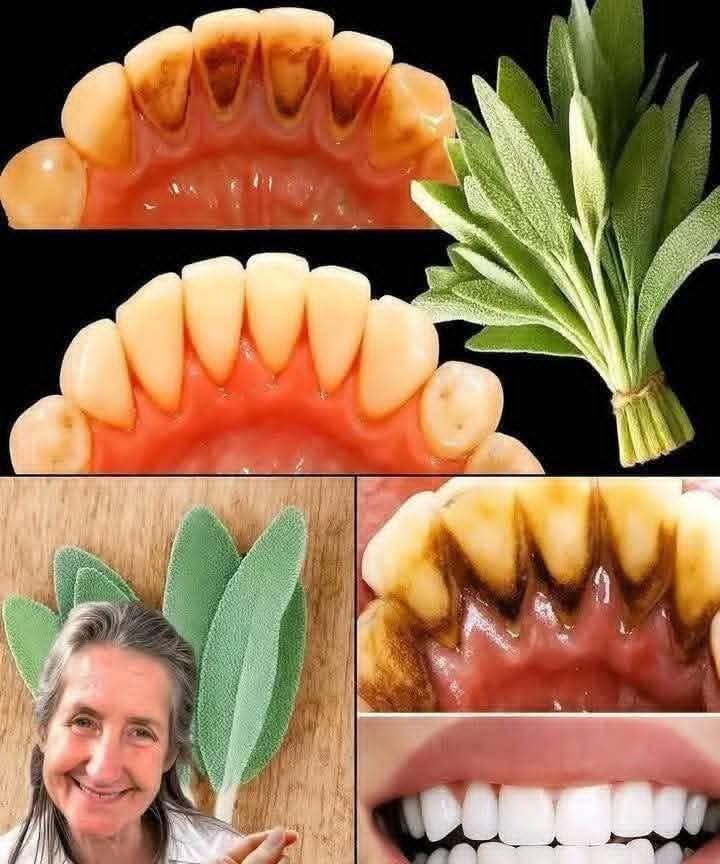
🌿 Remove Tartar and Whiten Your Teeth Naturally with Sage Leaves
Sage isn’t just a kitchen herb—it’s a plant that has been used for oral care for centuries. Long before commercial toothpaste existed, people relied on sage leaves to help keep their teeth clean and their breath fresh.
Today, modern science is catching up to what traditional cultures already knew.
🦷 Why Sage Has Been Used for Oral Health
1. Natural Cleansing Properties
Sage leaves contain natural compounds that help:
-
Reduce bacteria in the mouth
-
Support cleaner teeth and gums
-
Promote fresher breath
This makes sage a popular traditional remedy for everyday oral hygiene.
2. May Help Reduce Surface Stains
When used gently, sage leaves have a mild abrasive texture that can help remove surface stains caused by:
-
Tea
-
Coffee
-
Food residue
⚠️ Important: This does not replace professional whitening or dental cleaning.
3. Supports Gum Health
Sage has traditionally been used to:
-
Soothe gums
-
Support oral comfort
-
Help maintain a balanced mouth environment
Healthy gums are essential for preventing tartar buildup.
🌿 How Sage Is Traditionally Used for Teeth
Method 1: Sage Leaf Rinse
-
Boil a few fresh or dried sage leaves in water
-
Let it cool
-
Use as a mouth rinse once daily
Method 2: Gentle Sage Rub
-
Wash a fresh sage leaf thoroughly
-
Gently rub it on teeth for a short time
-
Rinse your mouth well afterward
✔ Use only occasionally to avoid enamel wear.
⚠️ Important Safety Notes
-
Sage helps with surface cleanliness, not hardened tartar
-
Hardened tartar can only be removed by a dentist
-
Do not scrub aggressively—this can damage enamel
-
Always consult a dentist for persistent dental issues
Natural remedies support care—they don’t replace professional treatment.
🌱 Why People Are Rediscovering Sage
-
It’s natural and affordable
-
No harsh chemicals
-
Backed by traditional use
-
Easy to grow at home
Sometimes the simplest solutions come from the past.
🌿 Final Thought
Sage won’t give you instant Hollywood-white teeth—but with gentle, regular care, it can be a natural ally for a cleaner, fresher smile.
Nature supports. Dentists protect.
The best care often uses both.
